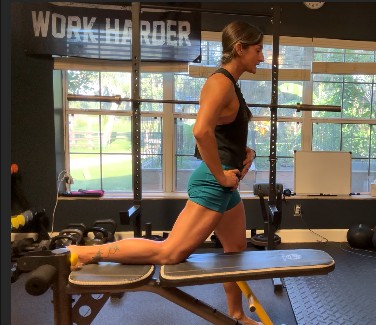
https://youtu.be/rUTBYn3auGM Why Ankle Mobility Matters for Performance and Injury Prevention Whether you're training for your first 5K, competing in a marathon, playing pickleball, lifting weights, or simply enjoying an active lifestyle, your ankles play a much bigger role than most people realize.Limited ankle flexibility doesn't just affect your feet—it can alter movement throughout your entire …


Why Ankle Mobility Matters for Performance and Injury Prevention
Whether you’re training for your first 5K, competing in a marathon, playing pickleball, lifting weights, or simply enjoying an active lifestyle, your ankles play a much bigger role than most people realize.
Limited ankle flexibility doesn’t just affect your feet—it can alter movement throughout your entire body. Poor ankle mobility has been linked to Achilles tendon pain, plantar fasciitis, shin splints, knee pain, hip problems, balance deficits, and even low back pain.
At Kickstart Physical Therapy, we frequently evaluate ankle mobility in runners, athletes, and active adults because restoring normal movement often improves performance while reducing the risk of injury.
At Kickstart Physical Therapy, our goal is to empower you to function at your very best. Isn’t it time for you to Kickstart your health journey?
What Is Ankle Mobility?
Ankle mobility refers to how well the ankle joint moves, particularly the ability to bend the foot upward (dorsiflexion).
This motion is essential for:
- Walking
- Running
- Squatting
- Lunging
- Climbing stairs
- Jumping
- Landing
- Cutting and changing directions
When ankle motion becomes restricted, the body compensates by moving differently. Those compensations may place excessive stress on the knees, hips, or spine.
Signs Your Ankles May Be Too Stiff
You may have limited ankle mobility if you:
- Feel tight calves every morning
- Can’t squat without your heels lifting
- Frequently roll your ankles
- Have recurring Achilles tendon pain
- Experience plantar fasciitis
- Develop shin splints
- Notice knee pain during squats or running
- Feel unstable during single-leg balance
- Have difficulty descending stairs
Even high-level athletes can have surprisingly stiff ankles without realizing it.
Why Calf Flexibility Is So Important
The calf muscles—including the gastrocnemius and soleus—are among the most common contributors to ankle stiffness.
When these muscles become tight, they restrict dorsiflexion and increase stress on structures throughout the lower leg.
Stretching both calf muscles is important:
Gastrocnemius Stretch
- Knee straight
- Heel remains on the ground
- Targets the larger calf muscle
Soleus Stretch
- Knee slightly bent
- Heel remains on the ground
- Targets the deeper calf muscle that plays a critical role during walking and running
Many people only stretch with the knee straight, leaving the soleus neglected.
Myofascial Release Can Restore Better Movement for Athletes
Sometimes muscles aren’t simply “tight”—the surrounding fascia and connective tissues become restricted.
Myofascial release is a hands-on treatment that addresses restrictions within these tissues, helping improve:
- Tissue mobility
- Muscle flexibility
- Blood flow
- Joint movement
- Overall movement efficiency
For runners and athletes, releasing restrictions in the calves, Achilles tendon region, foot, and surrounding tissues often allows the ankle to move more naturally and comfortably.
Joint Mobilization and Manipulation May Be the Missing Piece
Sometimes stretching alone isn’t enough.
The ankle joint itself may become stiff following:
- Previous ankle sprains
- Immobilization
- Surgery
- Repetitive overuse
- Chronic compensation patterns
In these situations, skilled joint mobilization—or when appropriate, manipulation—can help restore normal joint mechanics.
Improving the way the joint moves often allows muscles to function more efficiently and may make stretching significantly more effective.
Treatment is always individualized based on a thorough evaluation and your specific needs.
Better Ankle Mobility Can Improve Athletic Performance
Athletes often focus on strength and conditioning while overlooking mobility.
Research has shown that improving ankle mobility may help:
- Increase squat depth
- Improve running efficiency
- Enhance jumping and landing mechanics
- Improve balance
- Generate more force during push-off
- Reduce compensatory movement patterns
- Improve agility and cutting performance
Small improvements in ankle motion can produce meaningful improvements throughout the kinetic chain.
Injury Prevention Starts with Better Movement
Poor ankle mobility has been associated with several common injuries, including:
- Achilles tendinopathy
- Plantar fasciitis
- Shin splints
- Recurrent ankle sprains
- Calf strains
- Patellar tendon pain
- Knee pain
- Hip overuse injuries
While no treatment can completely prevent injuries, restoring normal movement patterns may reduce unnecessary stress placed on muscles, tendons, and joints.
How Physical Therapy Can Help Calf and Ankle Flexibility
At Kickstart Physical Therapy, treatment goes beyond simply handing you a list of stretches.
Your care may include:
- Comprehensive movement assessment
- Running and walking analysis when appropriate
- Soft tissue mobilization
- Myofascial release
- Joint mobilization and manipulation (when indicated)
- Individualized stretching program
- Strengthening exercises
- Balance and stability training
- Return-to-running or return-to-sport progression
- Education to help reduce the risk of future injuries
Every treatment plan is tailored to your goals—whether that’s finishing your first race, setting a personal record, returning after injury, or simply moving with less pain.
Don't Wait Until You're Injured
Many athletes seek treatment only after pain develops.
Improving ankle mobility before symptoms appear may help optimize movement, improve performance, and decrease unnecessary stress on other joints.
Think of ankle mobility as routine maintenance for your body—small improvements today can help keep you moving tomorrow.
If tight ankles, recurring injuries, or movement limitations are holding you back, a comprehensive physical therapy evaluation can identify the underlying causes and develop a personalized plan to help you move better, perform better, and stay active.
Ready to Move Better?
Whether you’re a runner, golfer, pickleball player, gym enthusiast, or simply enjoy staying active, improving ankle mobility may be one of the most valuable investments you can make in your long-term health and performance.
Contact Kickstart Physical Therapy today to schedule a comprehensive movement assessment and discover how one-on-one hands-on treatment, personalized exercise, and expert guidance can help you move with greater confidence.
Tags:achilles tendon pain tampa and wesley chapelbest physical therapy Tampa Wesley Chapelchronic pain physical therapyfailed physical therapy Floridafloridamanual physical therapy wesley chapel tampa floridamyofascial release tampa wesley chapel floridaone-on-one physical therapy Wesley Chapel Tampapersonalized physical therapyphysical therapy for calf and ankle pain tampaphysical therapy for runners and athletes tamparoot cause of pain physical therapy