https://youtu.be/qfIYrIir8h8 What Are the Hip Flexors? The hip flexors are a group of muscles located at the front of the hip that help lift your knee toward your chest. The primary hip flexor muscles include:Iliopsoas (psoas major and iliacus)Rectus femoris (part of the quadriceps)SartoriusTensor fasciae latae (TFL)These muscles play a critical role in walking, running, …


What Are the Hip Flexors?
The hip flexors are a group of muscles located at the front of the hip that help lift your knee toward your chest. The primary hip flexor muscles include:
- Iliopsoas (psoas major and iliacus)
- Rectus femoris (part of the quadriceps)
- Sartorius
- Tensor fasciae latae (TFL)
These muscles play a critical role in walking, running, climbing stairs, and maintaining posture.
At Kickstart Physical Therapy, our goal is to empower you to function at your very best. Isn’t it time for you to Kickstart your health journey?
Why Do Hip Flexors Become Tight?
Several lifestyle and activity factors can contribute to hip flexor tightness:
Prolonged Sitting
When you sit for extended periods, your hips remain in a flexed position. Over time, the hip flexors can adaptively shorten, leading to stiffness and reduced mobility.
Running and Athletic Activities
Runners repeatedly use their hip flexors during every stride. Without proper mobility work, recovery, and strength training, these muscles can become overworked and feel tight.
Poor Posture
Forward head posture, slouching, and excessive sitting can alter pelvic positioning and place additional stress on the hip flexors.
Muscle Imbalances
Weak gluteal muscles and core muscles often force the hip flexors to work harder, creating excessive tension and tightness.
Tight Hip Flexors and Low Back Pain
Many people are surprised to learn that tight hip flexors can contribute to low back pain.
The psoas muscle attaches to the lumbar spine and pelvis. When it becomes excessively tight, it may pull the pelvis into an anterior pelvic tilt (forward tilt), increasing stress on the lower back.
Common symptoms include:
- Aching low back pain
- Stiffness after prolonged sitting
- Difficulty standing upright
- Hip discomfort during walking or exercise
It’s important to note that not all low back pain originates from tight hip flexors, but they are often part of the overall movement dysfunction.
Why Hip Flexor Mobility Matters for Runners
For runners, adequate hip extension is essential for efficient stride mechanics.
When hip flexors become tight:
- Stride length may decrease
- Running efficiency can suffer
- Glute activation may be reduced
- Compensatory stress can occur at the knees and lower back
- Risk of overuse injuries may increase
Improving hip mobility allows runners to achieve better hip extension during push-off, which can improve performance and reduce unnecessary stress on other joints.
Best Hip Flexor Stretch: Half-Kneeling Hip Flexor Stretch
One of the most effective stretches for the hip flexors is the half-kneeling hip flexor stretch.
How to Perform It
- Kneel on one knee with the opposite foot in front.
- Keep your torso upright.
- Gently tuck your pelvis underneath you (posterior pelvic tilt).
- Shift your body forward slightly until you feel a stretch in the front of the hip of the kneeling leg.
- Hold for 30 seconds.
- Repeat 2–3 times per side.
Common Mistake
Many people simply lean forward without tilting the pelvis. This often reduces the effectiveness of the stretch and places additional stress on the low back.
Additional Ways to Improve Hip Mobility
Glute Strengthening
Exercises such as:
- Bridges
- Clamshells
- Hip thrusts
- Step-ups
can help improve pelvic stability and reduce excessive strain on the hip flexors.
Core Stability Training
A strong core helps maintain proper pelvic alignment and supports efficient movement patterns.
Frequent Movement Breaks
If you work at a desk, stand up and move every 30–60 minutes to prevent prolonged hip flexion.
Walking
Short walking breaks throughout the day can help maintain hip mobility and improve circulation.
When Stretching Isn't Enough
Sometimes tight hip flexors are actually a symptom rather than the primary problem.
Persistent hip tightness may be related to:
- Joint mobility restrictions
- Weak gluteal muscles
- Poor movement mechanics
- Running technique issues
- Lumbar spine dysfunction
- Pelvic alignment problems
If you repeatedly stretch but the tightness keeps returning, a comprehensive movement assessment may help identify the underlying cause.
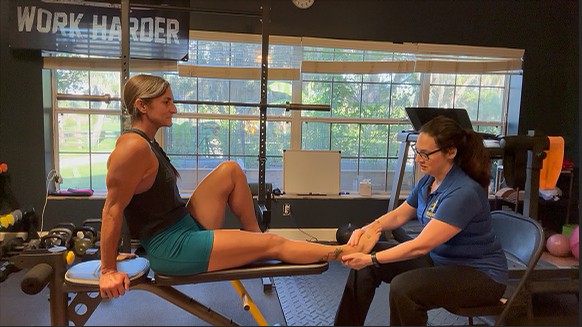
How Physical Therapy Can Help
At Kickstart Physical Therapy, we evaluate the entire movement system rather than focusing solely on the area of discomfort.
Treatment may include:
- Manual therapy
- Joint mobilization
- Targeted stretching
- Strengthening programs
- Running gait analysis
- Core stabilization training
- Postural education
By addressing the root cause, many patients experience lasting improvements in mobility, comfort, and performance.
Take the First Step Toward Better Mobility
Whether you’re a runner looking to improve performance, someone with a desk job experiencing stiffness, or dealing with persistent low back pain, improving hip flexor mobility may be an important piece of the puzzle.
A personalized physical therapy evaluation can help determine whether tight hip flexors are contributing to your symptoms and identify the most effective treatment approach for your specific needs.
Kickstart Physical Therapy provides one-on-one, individualized care to help active adults move better, feel better, and return to the activities they love.
Tags:best physical therapy Tampa Wesley Chapelchronic pain physical therapyfailed physical therapy Floridahip flexor tightness painmanual physical therapy wesley chapel tampa floridamyofascial release tampa wesley chapel floridaone-on-one physical therapy Wesley Chapel Tampapersonalized physical therapyphysical therapy for complex casesphysical therapy for hip flexor and low back painroot cause of pain physical therapy